A WordPress page tests more than the web server. It can run code, read files and query stored data. The browser then has to turn the response into a page.
This site gives us a fixed set of pages to test. Each page uses the same theme and stack. That makes it easier to trace how a change affects load times.
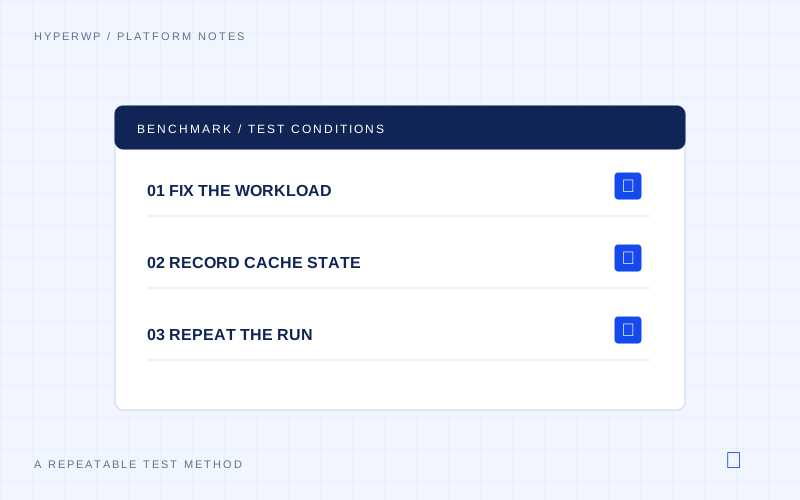
A known workload
The homepage contains post previews and images. Article pages have longer text. Some also include tables or screenshots. Each page creates a different mix of work for the server and browser.
A change to the theme, a plugin or the data can change that work. A useful test needs to account for those changes before results are compared.
The site’s CPU, RAM and storage limits are listed on the homepage. These describe the resources assigned to the site, not the full capacity of the host server.
Why the theme is lightweight
The theme uses system fonts and local images. Its demo pages do not need JavaScript to show their content.
That keeps the front end small. There are fewer files to load and fewer steps before the page can be drawn. It also makes it easier to separate server work from work done in the browser.
A shop with more plugins may need to run more code and read more data. This site gives us a known workload; it does not stand in for every type of site.
Cache state and request paths
A warm cache may serve a saved result without running the code that originally produced it. A cold cache may need code to run and data to be fetched before the page can be sent.
Both states matter. A cached response shows one path through the stack. A request that cannot use that result shows another.
The page, cache state and test location all help explain a result. One fast response does not describe every request the host will handle.
Reading the results
The site shows the path from server to browser using real pages and data. The articles explain the roles of the parts involved, from CPU work to database caching.
A test result still needs context. Server load, the device and the network can all affect what is measured. Those details help show which part of a result comes from the site and which comes from the test itself.